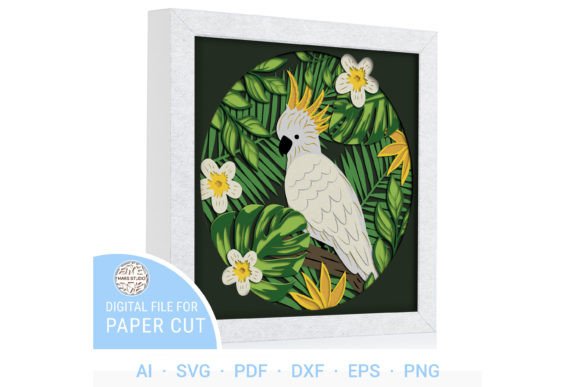
COCKATOO Multilayer Paper Cut File
As a designer who spends half my life staring at stitch charts and the other half worrying about thread tension, I approach every new digital asset with a healthy dose of skepticism. We have all seen designs that look stunning in a vector preview but fall apart under the needle. Today, I am putting COCKATOO Multilayer Paper Cut File through its paces. This isn't just another clipart image; it is a structured design intended for cutting machines like Cricut or Silhouette, which implies a specific geometric precision that translates interestingly into the world of textile arts.
The core concept here is "paper cut" aesthetics. In embroidery terms, this usually screams appliqué. The description highlights an "enchanting Layered Cockatoo," suggesting a composition built on distinct visual layers rather than a single solid shape. For an embroiderer, this is a crucial distinction. A standard fill-stitch bird might lose detail at small sizes, but a multilayer approach allows us to play with texture, contrast, and depth. My goal is to determine if this design holds up as a viable machine embroidery design for serious craft business applications or if it remains strictly a hobbyist paper craft.
First Impressions: Visual Personality and Mood
When you first load the files, the mood is immediately established. The cockatoo theme evokes a sense of tropical warmth, whimsy, and playful elegance. It is not a stern or corporate design; it is friendly and inviting. This makes it exceptionally strong for personalized gift markets, particularly those targeting children, nurseries, or bohemian-style home decor enthusiasts.
The "layered" aspect is where the real value lies. By separating the design into distinct components—likely the body, wings, crest, and perhaps background elements—you gain control over the final look. In a traditional single-file embroidery, the machine must jump between colors frequently, which can lead to messy backings or visible thread trails. With a multilayer structure, you can treat each layer as a separate appliqué piece. This allows for cleaner edges and a more sophisticated finish. The visual personality is bold enough to stand alone on a tote bag but detailed enough to serve as a focal point on a sweatshirt.
Real-World Application: From Screen to Stitch
Let’s talk about practical use. I recently considered using a design like this for a batch of custom embroidered patches for a local boutique. The challenge with birds in embroidery is often the feathers. If you try to render every feather with individual satin stitches, the design becomes dense and stiff. However, the COCKATOO Multilayer Paper Cut File suggests a silhouette-based approach. This is smart.
Imagine applying this to a heavy cotton canvas tote bag design. You could use a contrasting fabric for the main body of the cockatoo, then add a second layer for the wing details using a textured linen or a subtle patterned print. This creates a tactile experience that pure thread cannot replicate. The customer feels the difference between the smooth base and the textured overlay. It elevates a simple handmade product into something that feels curated and high-end.
For sweatshirt embroidery, the layered look works beautifully against the soft pile of fleece or French terry. The crisp edges of the "paper cut" style provide a sharp contrast to the fuzzy fabric, making the design pop without looking muddy. It also translates well to apron embroidery for kitchen-themed gifts, where durability and clear visibility are key. The bright, distinct shapes remain legible even after multiple wash cycles, provided the stitching is secure.
Where Caution Is Required
No design is perfect for every surface. There are specific scenarios where you need to be careful with this file. First, consider small hoop sizes. If you attempt to shrink this multilayer composition too much, the individual layers may become indistinguishable. The eye needs space to process the separation between the crest, the eye, and the beak. If the design falls below two inches in height, it risks becoming a blurry blob of color rather than a recognizable bird.
Furthermore, avoid using this on highly textured fabrics like chunky knits or raw denim unless you are an advanced user. The stability required to keep these precise layers aligned can be compromised by uneven surfaces. Similarly, stretchy fabrics require excellent stabilizer support. If the fabric distorts during stitching, your clean "paper cut" lines will warp, ruining the illusion of precision. Always test on scrap fabric first to ensure your stabilizer choice matches the fabric weight.
Technical Considerations for the Designer
Since this file originates from the world of laser cutting and vinyl, we must translate its logic to embroidery. The sharp angles and clean curves typical of laser-cut art are actually advantageous for embroidery because they reduce the need for complex digitizing hacks. However, you must pay attention to stitch density. Even if the design is meant to be filled with fabric, the outline stitches (often satin stitch) need to be robust enough to hold the fabric edge in place without puckering.
Thread color selection is critical. Because the design relies on layers, the contrast between adjacent layers defines the shape. Using analogous colors (e.g., yellow next to orange) might cause the layers to blend together visually. High contrast (e.g., white against navy) will make the layered effect sing. I recommend testing your thread colors in black and white mockups to ensure the structural integrity of the design is maintained regardless of hue.
Also, consider the fabric texture. A smooth cotton or linen will showcase the crispness of the design best. Velvet or corduroy might absorb some of the sharpness, creating a softer, more vintage look. Neither is wrong, but they yield different results. Understanding this helps you market the product correctly—a velvet version appeals to a different buyer than a crisp cotton one.
Commercial Viability and Brand Consistency
For Etsy sellers and small shop owners, versatility is money. The COCKATOO Multilayer Paper Cut File offers high versatility. It fits seamlessly into seasonal collections. During summer, it works as a beach-themed accessory. In spring, it aligns with garden parties and baby showers. Its neutral yet cheerful aesthetic allows it to bridge categories.
It also enhances brand consistency. If your brand focuses on nature-inspired, handcrafted goods, this design reinforces that identity. It looks professional and intentional. When customers see a finished product with clean, layered details, their trust in your craftsmanship increases. They perceive the item as higher quality, which justifies a premium price point. This is especially true for commercial embroidery projects where volume matters but perceived value drives sales.
Final Verdict
The COCKATOO Multilayer Paper Cut File is more than just a cute graphic; it is a functional blueprint for creating textured, high-quality embroidered goods. It succeeds because it understands the limitations of flat stitching and offers a solution through layering. Whether you are creating a custom apparel line, a series of nursery decor items, or unique wedding gifts, this design provides a strong foundation.
My advice? Do not rush to production. Test the file in your software. Check the hoop size constraints. Inspect the small details. Confirm whether the licensing allows for commercial use if you plan to sell the finished items. Once you have validated the technical aspects, you will find that this design delivers exactly what it promises: an enchanting, layered, and professionally finished result that stands out in a crowded marketplace.