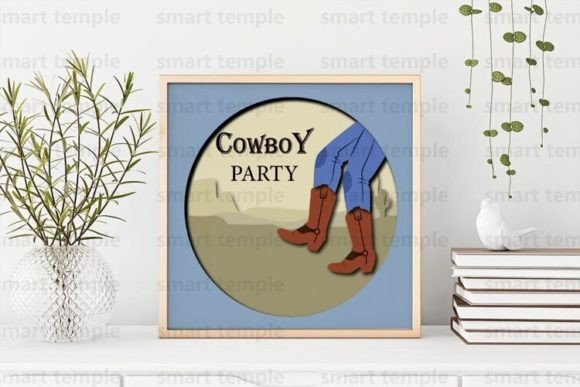
Cowboy Party 3d Shadowbox Review
As a designer who spends half my day staring at stitch charts and the other half arguing with fabric tension, I don’t just look for pretty pictures when I’m browsing new digital assets. I look for viability. I need to know if a design will actually hold up in production, whether it translates well from screen to hoop, and if it has enough personality to justify a customer’s hard-earned cash. When I first pulled up Cowboy Party 3d Shadowbox, Cowboy Party, my initial reaction was one of cautious curiosity. The title suggests a specific aesthetic—a blend of rustic charm and modern dimensional play—but does the execution support that promise? After running through a mental simulation of how this would perform on everything from a thick cotton canvas tote to a delicate baby onesie, here is my honest breakdown of what makes this file tick and where it fits in your workflow.
First Impressions: Mood and Visual Personality
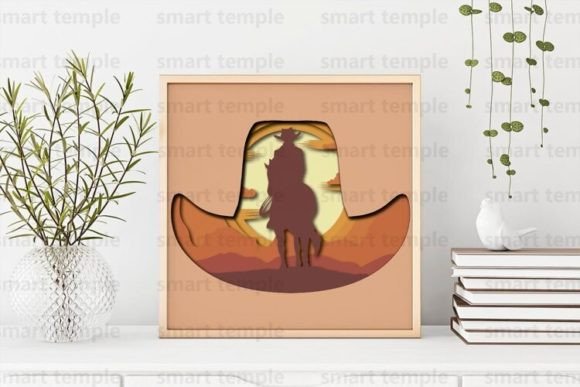
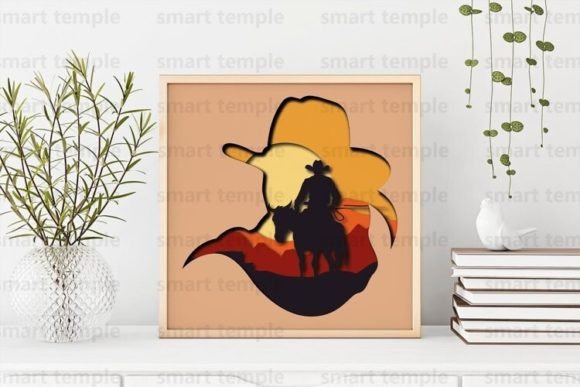
The name Cowboy Party 3d Shadowbox, Cowboy Party immediately evokes a sense of playful nostalgia. It isn’t trying to be a serious western portrait or a high-fashion rodeo advertisement. Instead, it leans into the whimsical side of Americana. The "3d Shadowbox" aspect implies depth, which is crucial in today’s market where customers are drawn to designs that pop off the fabric rather than lying flat. For an embroidery project, this means the design likely utilizes layering techniques—perhaps overlapping shapes or distinct color blocks—to create that illusion of depth without necessarily requiring complex machine programming.
Visually, the layout feels balanced but bold. In my experience, designs that try to cram too much detail into a small area often result in muddy stitching, especially when viewed from a distance. This design seems to prioritize clear silhouettes over microscopic details. That is a smart move for both the embroiderer and the end-user. A clean, strong graphic reads better on a sweatshirt across a room than it does under a microscope. The mood is festive yet grounded, making it suitable for a wide range of seasonal and lifestyle products.
Real-World Application: Where Does It Shine?
Let’s talk about practical use cases. If I were preparing inventory for a boutique or an Etsy shop, where would I place Cowboy Party 3d Shadowbox, Cowboy Party? My top recommendation would be custom apparel, specifically heavy-weight fabrics like denim jackets, flannel shirts, or thick cotton hoodies. The weight of these materials can support the structure of a shadowbox-style design, preventing the fabric from puckering under the density of the stitches.
I also see immense potential in home decor items. Because the design mimics a shadowbox, it translates beautifully to pillow covers or wall hangings made from burlap or linen. These textures complement the rustic cowboy theme perfectly. Imagine a neutral-colored linen pillow with this design stitched in earthy tones—terracotta, sage, and cream. It becomes a statement piece that feels handmade and curated, not mass-produced. For craft fair sellers, this type of product commands a higher price point because it feels substantial and decorative.
Beyond apparel and decor, this design works exceptionally well as an embroidered patch. Patches are a staple for any craft business looking to expand their catalog. You can apply this design to backpacks, caps, or even leather journals. The "party" aspect makes it particularly appealing for holiday-themed merchandise. Think Christmas gifts for cowboys, birthday celebrations for kids who love horses, or even wedding favors for a rustic-themed event. It bridges the gap between niche interest and broad appeal.
Technical Considerations and Potential Pitfalls
No design is perfect, and Cowboy Party 3d Shadowbox, Cowboy Party is no exception. There are specific scenarios where this file requires careful handling. First, consider the hoop size. If you attempt to stitch this on a very small area, such as the cuff of a sweatshirt or the front panel of a baseball cap, you may run into issues with registration. The layers that create the 3D effect need enough space to breathe; otherwise, they will overlap awkwardly, creating a bulky, uneven texture that might irritate the wearer.
Fabric choice is equally critical. Avoid using this design on thin, stretchy fabrics like jersey knit unless you are using a heavy-duty stabilizer. The tension required to keep the threads taut could distort the fabric, ruining the crisp lines of the shadowbox effect. Similarly, dark fabrics can be tricky. If the design relies on negative space or light thread colors to define its shapes, it may get lost against a black background. Always test your thread colors against your chosen fabric before committing to a full production run.
Another area to watch is stitch density. While the description mentions it is a set of layers for cutting machines like CNC or laser cutters, when adapted for machine embroidery design, you must ensure the fill stitches are not too dense. Excessive density leads to needle breaks, thread jams, and stiff, uncomfortable finished products. If the design includes large areas of solid fill, consider adding tear-away stabilizer underneath to provide extra support during stitching.
Designer Notes for Optimal Results
- Test on Scrap Fabric: Never go straight to your final product. Stitch the design on a scrap piece of the same material to check for puckering, tension issues, and color contrast.
- Check Small Details: Inspect the smallest elements of the design. Are they legible? Will they fray easily after washing? If the details are too fine, they may not survive multiple laundry cycles.
- Mockup in Black and White: Convert your design to grayscale to evaluate the value contrast. If the shapes blend together in black and white, they will likely lack definition in color.
- Stabilizer Selection: Use the appropriate stabilizer for your fabric. Cut-away stabilizers are generally safer for stretchy or heavy fabrics, while tear-away works well for stable wovens.
- Licensing Verification: Before selling any finished goods, confirm the commercial usage rights of the file. Even if you bought it for personal use, commercial licenses often require an additional fee or specific terms.
Final Verdict: Is It Worth Adding to Your Library?
Overall, Cowboy Party 3d Shadowbox, Cowboy Party is a versatile asset that offers more than just a simple graphic. Its layered approach gives it a premium feel that resonates with buyers looking for unique, handmade-quality items. It is not a one-size-fits-all solution—it demands respect for fabric types and proper stabilization—but when executed correctly, it delivers a high-end look that boosts perceived value.
For Etsy sellers and small shop owners, this design is a strong contender for seasonal collections and personalized gift markets. It appeals to a broad demographic, from young parents buying baby clothes to adults decorating their homes. The key to success lies in thoughtful presentation. Pair the design with complementary thread colors and quality backing materials, and you have a winning product. Just remember to do your homework on the technical side. Test, adjust, and refine. That is the difference between a hobbyist’s mistake and a professional’s masterpiece.
If you are looking to add a touch of whimsical western flair to your embroidery project portfolio, this file deserves a spot in your queue. It is practical, visually engaging, and adaptable. With the right preparation, Cowboy Party 3d Shadowbox, Cowboy Party can become a standout item in your finished product lineup, driving engagement and sales for your commercial embroidery ventures.