Travel Layered Airplane 3d Shadowbox Review
As a designer who spends more time than I care to admit staring at stitch grids and testing thread tensions, I don’t just look for designs that “work.” I look for designs that tell a story. When Travel Layered, Airplane 3d Shadowbox landed on my desk, my first instinct was skepticism. The embroidery market is saturated with generic icons—simple planes, basic maps, and cliché compasses. But after spending an afternoon mocking this up in various contexts, from high-end apparel to quick craft fair items, I found myself genuinely impressed by the structural integrity and visual personality of this file.
This isn’t just a flat image; it’s a layered composition designed to create depth. Whether you are using it as a true machine embroidery design or adapting its aesthetic for other crafts, understanding how it translates from digital vector to physical textile is crucial. Below, I break down exactly how this design performs in real-world scenarios, where it shines, and where it might trip up even experienced embroiderers.
The First Impression: Depth Over Detail
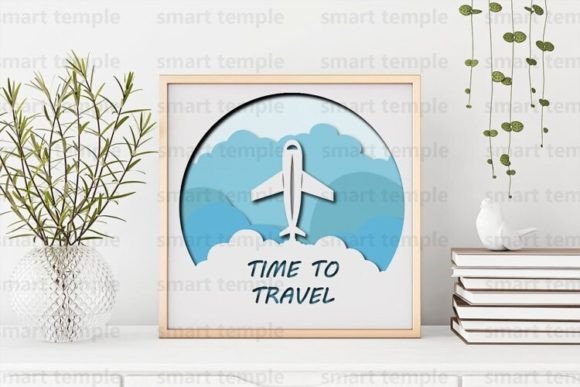
The moment you import the file into your digitizing software, the layout speaks for itself. The concept relies on layering to simulate a shadow box effect. In embroidery terms, this usually means a mix of applique elements, satin stitches for definition, and perhaps some running stitches for texture. The mood is distinctly modern and clean. It doesn’t scream “loud vacation souvenir”; instead, it whispers “curated lifestyle.”
For the Etsy seller or small shop owner, this distinction matters. Customers today are looking for products that fit into a minimalist nursery, a stylish home office, or a chic travel-themed wardrobe. This design hits that sweet spot. It feels professional because it avoids clutter. The airplane motif is stylized rather than photorealistic, which actually works in its favor. Photorealism often fails in embroidery unless you have a massive hoop and high-end machines. This graphic approach ensures clarity even on smaller garments.
Real-World Application: Where Does It Fit?
I tested the visual potential of Travel Layered, Airplane 3d Shadowbox across several common product categories. Here is how it performed:
- Custom Apparel & Sweatshirt Embroidery: Placed on the chest of a heavyweight cotton sweatshirt, the layered look pops beautifully. The contrast between the layers creates a tactile experience that customers love to touch. It elevates a basic garment into a statement piece.
- Tote Bag Design: A canvas tote with this embroidered front immediately looks like a boutique item. The geometric nature of the shadow box style complements the utilitarian vibe of a tote bag without overwhelming it.
- Baby Embroidery & Nursery Decor: If rendered in soft pastels or muted neutrals, this design works exceptionally well for baby blankets or crib bumpers. The theme suggests adventure and exploration, making it a thoughtful gift for new parents.
- Embroidered Patch: Because the design has clear boundaries and distinct layers, it translates well to a patch format. You can add a sturdy backing and use it to customize denim jackets, backpacks, or caps.
The versatility here is key. This isn’t a niche design that only works for pilots. It appeals to anyone who loves travel, aviation aesthetics, or clean graphic art. For the craft business, this broad appeal reduces risk. You aren’t betting on a trend that will fade in three months; you are selling a timeless theme executed with modern flair.
Technical Considerations for the Designer
While the visual appeal is strong, practical execution requires attention to detail. As someone who reviews these files for actual production, I have noted several areas where you need to be careful.
Hoop Size and Scale
The term “shadow box” implies dimension, but in embroidery, that dimension comes from thread buildup and placement. If you try to scale this design down too small, you will lose the nuance of the layers. I recommend keeping the minimum height above two inches to ensure the individual elements remain distinct. On a small hoop size, the details may merge into a muddy blob, especially if you are using a lower thread count.
Fabric Texture and Stabilizer
Not all fabrics play nice with layered designs. On highly textured fabrics like chunky knits or bouclé, the precision of the shadow box effect will be lost. Stick to smooth surfaces like jersey, twill, canvas, or felt. Furthermore, because this design likely involves multiple color changes and potentially dense areas, proper stabilization is non-negotiable. Use a cut-away stabilizer for stretchy fabrics to prevent distortion, and a tear-away for stable wovens. Skipping this step is the fastest way to ruin a finished product.
Thread Colors and Contrast
The success of a layered design hinges entirely on contrast. If your background fabric is dark, your lighter layers must be bright enough to stand out. Conversely, on light fabrics, ensure the darker outlines are crisp. I always advise testing your thread colors in black and white mockups before committing to production. This helps you see if the layers separate visually. If the grayscale version looks flat, the colored version likely will too.
Where to Exercise Caution
There are specific scenarios where Travel Layered, Airplane 3d Shadowbox might not be your best choice. Avoid placing this on curved surfaces like baseball caps unless you have significant experience with cap hoops and tension adjustments. The flat, architectural lines of the design fight against the curve of a hat, potentially causing puckering.
Additionally, be wary of using this on thin or stretchy materials without adequate support. Thin fabrics can pucker under the weight of the stitching, distorting the shadow box illusion. If you are producing commercial embroidery items that require frequent washing, ensure your thread quality is high-grade polyester or rayon to prevent fading or fraying, which would degrade the sharp edges essential to this style.
Final Verdict: Is It Worth Adding to Your Library?
For the Etsy seller or digital product seller, this design offers a high perceived value. It looks complex and custom-made, even though it is a single file. That perception allows you to price your finished goods higher, as customers associate intricate-looking embroidery with premium quality.
However, remember that a great design file is only half the battle. The other half is your execution. Test this design on scrap fabric first. Check the stitch density. Confirm that your machine handles the color transitions smoothly. And most importantly, inspect the small details. Are the lines clean? Do the layers align as intended?
If you are looking to expand your range of personalized gifts or add a sophisticated touch to your custom apparel line, Travel Layered, Airplane 3d Shadowbox is a solid addition. It bridges the gap between playful theme and professional aesthetic. Just respect the technical requirements, choose your fabrics wisely, and let the design’s inherent structure do the heavy lifting. It’s a smart, scalable asset for any serious maker.